
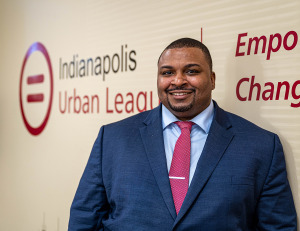
Black-led financial institution looks to create access to capital
Work is underway to determine what kind of support services Black-owned businesses will need to complement the loan fund.
Work is underway to determine what kind of support services Black-owned businesses will need to complement the loan fund.
Marion County’s IndyRent program has begun accepting applications for up to 12 months of rental assistance, Mayor Joe Hogsett’s administration announced Wednesday. The long-awaited move adds nine months of help to the program, which previously maxed out at three months.
Indianapolis is making preparations for its first Black-led Community Development Financial Institution, which will aim to offer businesses in economically disadvantaged communities access to capital and other help.
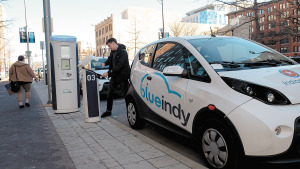
The city will release a request for proposals to developers to repurpose 29 of the 89 former charging-station sites before the end of the year, according to the Department of Metropolitan Development.

The nine planned projects stretch across the city. Each connects to existing and planned trails, bike-friendly streets, bus rapid transit lines and city landmarks.
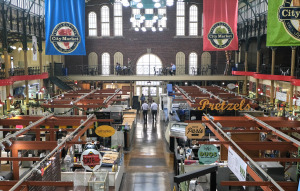
City officials will present the results of the 209-page report on potential options for redevelopment at a City Market board meeting Thursday, along with concrete plans for $5 million in maintenance and basic improvements.
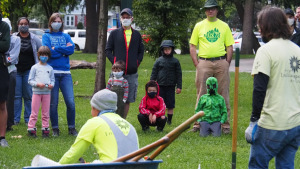
Keep Indianapolis Beautiful, which plants 3,000 to 4,000 trees in the city each year, is digging even deeper into data and working more closely with local government to make sure its tree-planting plans benefit all areas of the city in a more equitable way.

Officials are taking a fresh, hard look at municipal-owned real estate as part of a larger effort to repurpose several sites that will be largely vacated as agencies move to the Community Justice Campus.

Indy’s City-County Council approved $50 million in new bonds this month to tackle a backlog of drainage projects across the city.

City officials on Monday released a long-anticipated request for developers to submit ideas for reuse of the 28-story Indianapolis City-County Building, along with studies that show it would take more than $35 million in basic upgrades to repurpose the structure.

The Administration and Finance Committee advanced $10.5 million for a new solid waste facility and $7.5 million for a new firehouse—in addition to letting Indy borrow $126.7 million in bonds for a range of new buildings on the Community Justice Campus and other facilities.
Here are two ideas covering the two largest sources of (non-school) local revenue: property taxes and local income taxes.

Indianapolis is getting serious about possible redevelopment of the City-County Building, now that half of the 28-story monolith is set to be empty within months.
Indianapolis Mayor Joe Hogsett on Monday said he thinks the Marion County Prosecutor’s Office should relocate from downtown to the new Community Justice Campus, but that decision is still up in the air, according to Prosecutor Ryan Mears.
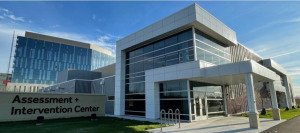
Marion County Prosecutor Ryan Mears said his hesitancy arises from concerns over how such a move could increase the prosecutor’s operating costs.
Earlier this month, the Democrat-controlled City-County Council voted 20-5 for new development standards that add residential and mixed-use districts to push bus usage, walkability and density county-wide.

When Indianapolis Parks and Recreation staff saw a large piece of land up for sale near a well-loved park, they jumped at the chance to add greenspace to the city’s property rolls.
The city of Westfield’s latest lawsuit against Clerk-Treasurer Cindy Gossard claims she allowed an unauthorized and unidentified IT professional to access city computers. Gossard claims she did so to investigate suspicious spyware.
The city’s IndyRent program—which launched last July with $15 million in funding and eventually grew to $96 million—has so far pushed out $53 million in rent payments to landlords of those seeking rental assistance.

Indianapolis Mayor Joe Hogsett’s plan, funded largely with federal coronavirus relief, gives $33 million to traditional law enforcement efforts, $82 million toward community-led programming and $51.5 million toward “root cause” services like mental health care, hunger relief and workforce development.