
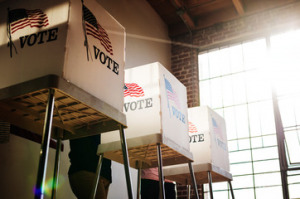
Group backing independent candidates wants Indiana to end straight-ticket voting
Bills to eliminate straight-ticket voting have been introduced numerous times in the Legislature over the past decade without winning passage.
Bills to eliminate straight-ticket voting have been introduced numerous times in the Legislature over the past decade without winning passage.
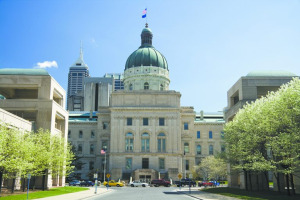
The Senate Elections Committee approved the measure after a six-hour public hearing on the bill that was largely dedicated to public testimony.
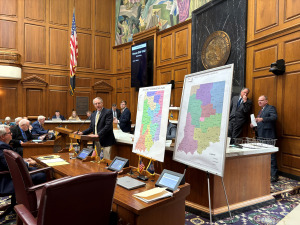
The Indiana House passed a set of new congressional maps that would give Republicans a marked advantage in the next election. Twelve Republicans joined Democrats in voting against the legislation, which now heads to the Senate.
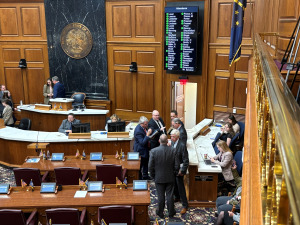
Indiana House Democrats on Monday decried the drafted maps as an “egregious gerrymander” and attempted multiple procedural maneuvers to prevent the legislative session from starting.
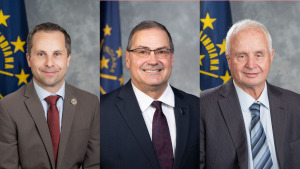
As redistricting rhetoric intensifies in Indiana, at least four Republican state senators who oppose the prospect—or are undecided—have reported attempted swatting attacks.

Republican Indiana legislative leaders avoided taking questions Monday about the political pressure they are facing from President Donald Trump over congressional redistricting, while the governor accused GOP senators of “hiding behind closed doors.”
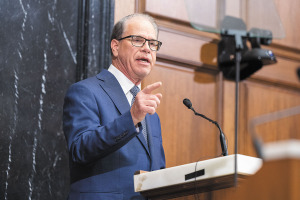
In a Truth Social post on Sunday, President Trump attacked Indiana state senators who declined to consider redistricting and said Braun “perhaps is not working the way he should” to round up support.
As the size of the race increases, the rules unique to independent candidates become nearly impossible to overcome.

The decision came as communities in four other Indiana districts also approved school tax questions in special elections.
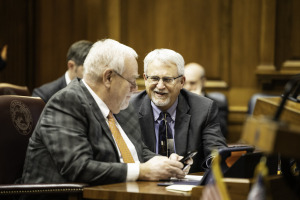
Mike Karickhoff is the first high-ranking member of the Legislature to make such a decision ahead of the 2026 elections.

Green, a Republican, was appointed the state’s public safety secretary by Gov. Mike Braun in January but abruptly resigned in early September amid an ethics complaint from the Office of Inspector General.
This year’s referendums are a test case in voter support at a time when Indiana is lowering property taxes and increasing how much of that funding some districts must share with charter schools.

The statement repeats the same evaluation last week from Rodric Bray’s office as the White House stepped up its pressure campaign on Indiana lawmakers, particularly Republican senators.

The expected move follows months of lobbying by the Trump administration for Indiana to redraw its congressional map.
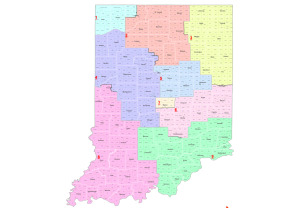
Currently, seven of Indiana’s nine districts are represented by Republicans. Advocates of redistricting say that new maps could give the GOP a strong shot at all nine seats.

During 2 -1/2 hours of arguments, the court’s six conservative justices seemed inclined to effectively strike down a Black majority congressional district because it relied too heavily on race.
Indiana leaders on Friday met with Vice President JD Vance for the third time as they work to secure support for mid-cycle, partisan redistricting.
Another poll concluded that most Hoosiers oppose a GOP effort to redraw congressional maps ahead of the 2026 midterms.

Bayh, 29, follows in the footsteps of his father, Evan Bayh, who served Indiana in multiple offices for more than 20 years—including Secretary of State.

Republican legal leaders, including Indiana Attorney General Todd Rokita, have declared a congressional district map redraw “perfectly legal.” Democrats and other opponents say they’ll challenge any such move in court.