

Braun announces date for special session for redistricting vote
The expected move follows months of lobbying by the Trump administration for Indiana to redraw its congressional map.
The expected move follows months of lobbying by the Trump administration for Indiana to redraw its congressional map.
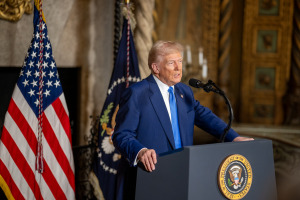
A firm that once employed President Donald Trump’s Chief of Staff Susie Wiles and Attorney General Pam Bondi has become the highest-paid lobbying shop in Washington.
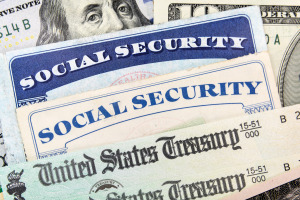
While the cost-of-living increase is in line with overall inflation for the year, it trails categories that are particularly relevant to older adults.
The benefits increase for nearly 71 million Social Security recipients will go into effect beginning in January.
The post late Thursday comes after Canadian Prime Minister Mark Carney said he aims to double his country’s exports to countries outside the U.S. because of the threat posed by Trump’s tariffs.

In Week 4 of the government shutdown, when many federal workers are furloughed or working unpaid hours, Gleaners Food Bank is helping TSA and FAA employees at Indianapolis International Airport fill the gap.
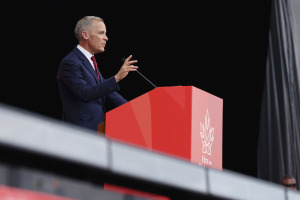
Indiana exports $13.9 billion in goods annually to Canada, with motor vehicle parts, automobiles and trucks each totaling more than $1 billion annually in exports.

That evaluation from Senate President Pro Tem Rodric Bray’s office comes as the White House has stepped up its pressure campaign on Indiana lawmakers.
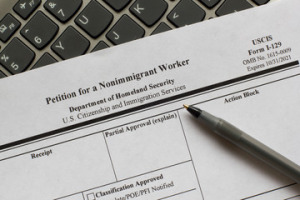
Some Hoosier employers are freezing efforts to recruit H-1B workers because they don’t know if the federal government will apply the $100,000 fee to certain applicants.

Lawmakers face greater pressure to act as Americans who buy insurance through the Affordable Care Act are seeing, or about to see, the consequences of enhanced subsidies expiring at the end of the year.
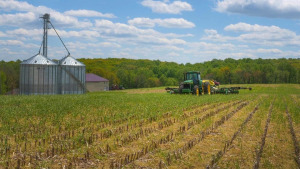
Employees at the Farm Service Agency help farmers apply for farm loans, crop insurance, disaster aid and other programs.

The suit is the latest example of workers scrambling to find recourse as federal agencies abandon their cases in response to Trump’s shake-up of the country’s civil rights enforcement infrastructure.
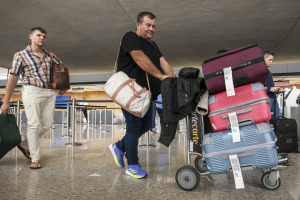
The president halted the admission of most refugees after he took office but made an exception for Afrikaners who he has said face racial discrimination.
Moving the program would not necessarily impact distribution of funding to the states. The money for the current school year has already been sent to states.

Although Indiana leans Republican, caucus members argued that Hoosier Democrats should still be represented in Congress.

With both sides showing no signs of movement, it’s unclear how long the stalemate will last—even as hundreds of thousands of federal workers will miss another paycheck and states are sounding warnings that key federal programs will soon lapse completely.

If approved, the plan would change the ways the state and school districts can merge and disburse federal grant funding.

Earlier this month, Beijing announced that it will require foreign companies to get approval from the Chinese government to export magnets containing even trace amounts of rare-earth materials.
President Donald Trump on social media called China’s decision to not buy soybeans “an Economically Hostile Act” amid its trade war with the U.S.

The path to going public during the shutdown requires some creativity, as well as the willingness to venture into uncharted territory.