
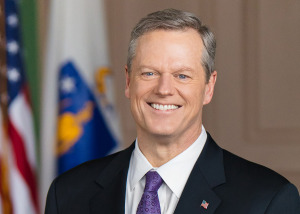
NCAA president shifts focus to employment status of college athletes during Senate hearing
NCAA President Charlie Baker warned that without congressional action, Division II and III schools might abandon their athletic programs.
NCAA President Charlie Baker warned that without congressional action, Division II and III schools might abandon their athletic programs.

A federal antitrust case could force the Indianapolis-based NCAA and the wealthiest conferences to create pro-style revenue sharing of billions of broadcast-rights dollars with football and basketball players.

Baker, who took over as president of the Indianapolis-based NCAA in March, has been spending a lot of time in Washington, D.C., lobbying lawmakers to help college sports with a federal law to regulate how athletes can be compensated for their fame.
Since the NCAA lifted its ban on college athletes earning money for use of their names, images and likenesses in summer 2021, it has been operating without detailed rules regarding NIL.

“Not a month next year is going to go by where we don’t have something significant happening in our city from a tourism perspective, whether that’s a large annual conference that’s coming back, or something new,” said Chris Gahl, executive vice president of Visit Indy.
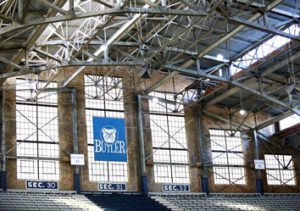
Butler University’s Hinkle Fieldhouse will host the final fours of both the inaugural Women’s Basketball Invitation Tournament and the men’s National Invitation Tournament in April.

The NCAA said its national office in Indianapolis was coordinating with law enforcement to deal with possibly criminal threats against committee members.
While many in and around college sports believe revenue-sharing with major college football players is inevitable, those in position to affect change are more cautious.
The former University of Southern California star running back is suing the Indianapolis-based NCAA over a 2021 statement from college sports’ governing body about a “pay-for-play arrangement.”

The spread of legalized sports gambling—and some early scandals—have captured the full attention of athletic departments and conference offices. All major conferences are paying independent betting monitors to make sure their athletes abide by the rules—and to catch those who are not.

In the two years since a Supreme Court ruling paved the way for college athletes to be compensated for their talents, it has been open season for businesses doing deals with NCAA stars—including trading card companies.
The review, which found college sports was at a “crossroads,” was one of the first items on NCAA President Charlie Baker’s to-do list when he took over in March.
Charlie Baker, president of the Indianapolis-based NCAA, called the legislation “a major step in the right direction.”
The College Athletes Protection & Compensation Act is only a discussion draft at this point, but notable in that both Democrats and Republicans are involved in trying to address issues that have disrupted college sports and the role of the Indianapolis-based NCAA.
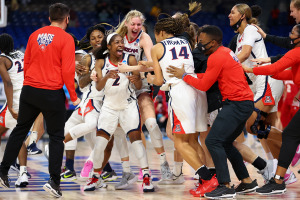
The tournament will operate like the men’s National Invitational Tournament as an option for 32 teams that do not make the women’s side of March Madness.

An NCAA committee earlier this year approved recommendations that could mean expanding the fields in both men’s and women’s basketball up to 90 teams, but there are many in the sport who believe the 68-team field and three weekends of play are ideal.
In a letter, NCAA President Charlie Baker said there are 17 active investigations into infractions of its sports-betting policy.
The rapidly expanding landscape of not-for-profit, donor-backed collectives paying college athletes to promote charities has been hit with a potentially seismic disruption.

The proposal released Friday would mark a big change for the NCAA, which has been conducting drug tests at championship events since 1986.
NCAA President Charlie Baker said Thursday he wants a federal law to regulate the way college athletes can be compensated for endorsement deals that creates a registry of deals, agent certification and uniform contract standards.