
Editorial: Southwest deserves punishment for widespread travel meltdown
Now the question is what should be done to punish the airline and what can prevent such a catastrophe in the future.
Now the question is what should be done to punish the airline and what can prevent such a catastrophe in the future.

With its flights running on a roughly normal schedule, Southwest Airlines is now turning its attention to repairing its damaged reputation after it canceled 15,000 flights around Christmas and left holiday travelers stranded.
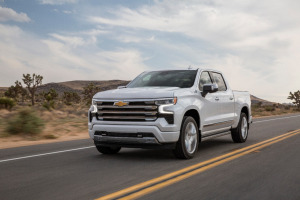
Shortages of computer chips and other parts continued to hobble the U.S. auto industry last year, contributing to vehicle sales dropping to their lowest level in more than a decade.
Southwest Airlines canceled more than 15,000 flights between Dec. 22 and Dec. 30, according to tracking service FlightAware. The flight disruptions began with a winter storm that swept across the country.
The carrier, which had canceled thousands of flights every day this week after a winter storm last weekend, reported fewer than 40 cancellations early Friday. That was still more than United, American and Delta combined
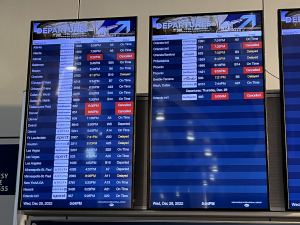
The 2,359 flights scrubbed by Southwest Airlines on Thursday represents 96 percent of all domestic cancellations.
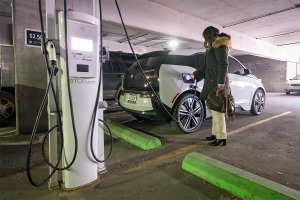
Starting Jan. 1, many Americans will qualify for a tax credit of up to $7,500 for buying an electric vehicle. But a complex web of requirements is casting doubt on whether anyone will be able to receive the full $7,500 credit.
Southwest Airlines’ overwhelmed technology—a scenario fueled by a punishing winter storm—left it this week facing some of the most difficult days in its half-century history.
More than 3,000 U.S. flights were canceled Tuesday among all carriers, with Southwest accounting for more than 2,600 of the total—a problem the airline blamed partly on tools for tracking and creating employee schedules.
The U.S. Department of Transportation called the rate of Southwest cancellations “disproportionate and unacceptable,” and sought to ensure that the Dallas carrier was sticking by its obligations to stranded customers.
According to FlightAware, a website that tracks airline delays and cancellations, 5,409 flights had been canceled Monday as of 4:30 p.m., while more than 16,000 flights had been delayed.
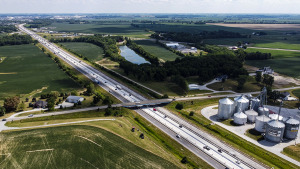
The Indiana Department of Transportation released a study that includes five possible locations for the interchange northwest of Lebanon near the planned site of the LEAP Lebanon Innovation and Research District.
To reduce crashes and fatalities, the group says Indiana should adopt a list of new laws, ranging from a motorcycle helmet mandate to a requirement that learners complete more drive time before qualifying for a license.

The massive order—United called it the biggest ever by a U.S. airline for twin-aisle or “widebody” planes—is a bold move for an airline that lost money throughout the pandemic until the middle of this year.
Although the study authors say the results can’t be used to gauge drug use on the roads nationwide, they say the high number of drivers, passengers and other road users with drugs in their systems is concerning.

The Perry Township school board voted on Monday to end school choice for elementary students effective next school year to help alleviate a severe bus driver shortage, despite significant opposition from parents.
Postponing the enforcement of the last phase of the Real ID Act will give motor vehicle departments across the country more time to process the new credentials.
Hertz Global Holdings Inc. said Monday that the settlement of 364 pending claims related to vehicle theft reporting would bring resolution to more than 95% of the pending theft reporting claims.
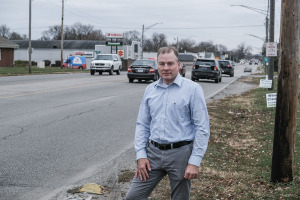
West-side leaders are pleased the city found $20 million for infrastructure improvements but remain disappointed that the area is missing out on the original $52 million in improvements the Blue Line was once scheduled to bring.
The bill lawmakers are considering would impose a compromise labor agreement that was voted down by four of the 12 unions representing more than 100,000 employees at large freight rail carriers.