
UPDATE: Divided Federal Reserve cuts key rate for second time this year
The Federal Reserve cut its key benchmark interest rate while saying it’s prepared to continue doing what it deems necessary to sustain the U.S. economic expansion.
The Federal Reserve cut its key benchmark interest rate while saying it’s prepared to continue doing what it deems necessary to sustain the U.S. economic expansion.
Several factors will influence the Fed’s decisions in the coming months on whether it needs to keep reducing borrowing rates to try to help sustain the U.S. economic expansion now in its 11th year.
Federal Reserve Chairman Jerome Powell had barely finished speaking to central bankers in Jackson Hole, Wyoming, before President Donald Trump escalated his attacks on the Fed, which he has repeatedly accused of keeping rates too high.
The rate reduction was the first since December 2008, when the Fed dropped its benchmark effectively to zero as it battled recession and financial crisis.
Under Chairman Jerome Powell, the Fed has faced pressure to ease credit since it raised its key rate in December for the fourth time in 2018 and hinted that additional rate increases were likely this year.
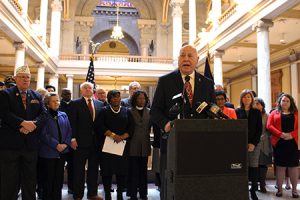
A Senate bill addressing subprime lending, which had a 69-page strip-and-insert amendment released the night before passing out of committee, is headed to the House.
With pressures on the U.S. economy rising, the Federal Reserve has been signaling that it’s in no hurry to resume raising rates after having done so four times in 2018.
With the economy strong, wages rising and unemployment at a near-five-decade low, the Federal Reserve remains on track to keep raising interest rates — just not this week.
President Donald Trump slammed the Federal Reserve as “crazy” for its interest-rate increases this year in comments hours after the worst U.S. stock market sell-off since February.
The Federal Reserve on Wednesday lifted its short-term rate for the eighth time since late 2015, and the Fed indicated that it expects to continue gradual increases.
Experts say variables include what type of loans a bank has on its books, local competition and marketplace demand.
The Federal Reserve is set Wednesday to modestly raise its key short-term interest rate for the second time this year. But attention will be focused on any hints the Fed might accelerate its hikes in the coming months.
Federal Reserve Chairman Jerome Powell told Congress on Tuesday that the outlook for the U.S. economy "remains strong" despite the recent stock market turbulence, keeping the central bank on track to gradually raise interest rates.
Strong jobs data that increased the likelihood the Federal Reserve will lift rates next month rattled equity investors who haven’t seen a week this bad in two years.
The Federal Reserve has raised its key interest rate for the third time in six months, providing its latest vote of confidence in a slow-growing but durable economy.
Federal Reserve Chairwoman Janet Yellen said in a speech in Chicago that the Federal Reserve expects steady economic improvement to justify additional rate increases.
With voters set to choose a new president and Congress in six days, the Federal Reserve will likely keep a low profile when it ends a meeting Wednesday to try to ensure it doesn't become part of the debate at the close of a tumultuous political campaign.
The Fed made clear in updated forecasts it issued Wednesday that it expects growth to remain tepid for at least three years.
One week after the Federal Reserve raised short-term interest rates from record lows, the average on a 30-year fixed-rate mortgage went the other way.
Average 30-year mortgage rates have tumbled below 4 percent, but it remains difficult to qualify for financing.