
Critics say Indiana redistricting dilutes minority influence
Critics assailed the proposed new Indiana congressional and legislative districts on Monday as rigged in favor of Republicans.
Critics assailed the proposed new Indiana congressional and legislative districts on Monday as rigged in favor of Republicans.
Luke Messer has left law firm Faegre Drinker to join Indianapolis-based Bose Public Affairs Group LLC, where he will counsel corporate clients in Indiana and in Washington, D.C., on governmental matters.
They are making a final effort to have an influence on Indiana’s Republican-controlled redistricting process as new maps are drawn for the state’s legislative and congressional districts.
Staring down a self-imposed Monday deadline, lawmakers said they would work nonstop to find agreement on specifics. Democrats’ views on those vary widely, but they largely agree with Biden’s idea of raising taxes on corporations and the wealthy.

The Indiana House on Thursday approved new state legislative and congressional election district maps, sending the maps to the Senate for consideration.
The intense focus on Biden’s big-money domestic proposal showcases how much is at stake politically for the president and his party in Congress.
The federal government faces a shutdown if funding stops on Sept. 30, the end of the fiscal year—midnight next Thursday. Additionally, at some point in October, the U.S. risks defaulting on its accumulated debt load if its borrowing limits are not waived or adjusted.
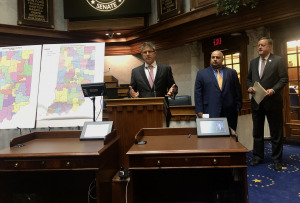
Indianapolis would gain a new state Senate district under Republicans’ proposed district maps, but the changes likely would otherwise have little impact on the GOP’s 39-11 supermajority in the Senate.
Congress is rushing into an all-too-familiar stalemate: The government faces a shutdown if funding stops at the end of the fiscal year, Sept. 30. At the same time, the U.S. risks defaulting on its debt load if the borrowing limits are not waived or adjusted.
The proposed maps essentially stayed the same as when they were released last week, with one minor amendment moving House districts in Fort Wayne to avoid splitting up an apartment complex.

“American Freedom with Mike Pence” is being produced in partnership with the Young America’s Foundation, a national conservative youth organization.
Republicans will keep greater control of Indiana’s Legislature than merited by the number of votes they receive, according to a political analyst who on Thursday called the state’s proposed new election districts among the most skewed in the country.
The Westfield City Council voted to delay payment of its legal and consulting fees this week for the second month in a row because the accounts are over budget.
The Indiana House elections committee opened two days of public hearings on the redistricting plan a little more than 24 hours after the new congressional and Indiana House maps were posted online.
Some Indiana House Republican incumbents could go head-to-head with their GOP colleagues next election cycle, based on shifts in the proposed redistricting maps.
Drafts of the state’s proposed new congressional and House district maps released Tuesday by Republicans aren’t likely to make a sizable changes in Indiana’s political landscape.
Other changes among Indiana’s nine congressional districts to account for population shifts don’t appear likely to shift the 7-2 control that Republicans now hold on those seats.
The Indianapolis City-County Council on Monday unanimously approved about $467 million in spending for pandemic recovery initiatives, rental assistance, a range of new public buildings and several greenway projects, most of it funded with federal coronavirus relief dollars.
The money will go toward design, construction and inspection for nine trail and greenway projects, including Pleasant Run Trail and Pogue’s Run Trail.
Republicans on Tuesday are set to release proposed new Indiana House and U.S. House maps that they’ve drawn behind closed doors.